How to remove standing water from your Sugar Land home safely
Standing water in a Sugar Land home gets dangerous fast. Here is the safe order of operations for pumping it out, drying the structure, and stopping mold.

Removing standing water from a Sugar Land home safely means three things in this order: stop the water source, kill the power to every wet room, then pump the water out in stages while you start drying the structure. Skip any of those steps and you risk shock, a second flood, or mold that starts colonizing within 24 to 48 hours.
How to remove standing water in Sugar Land is really a question about sequence, not equipment. Most of the damage we see in Fort Bend County homes comes from water that sat an extra day while somebody hunted for a shop vac. This guide walks through the safe order of operations, what standing water actually does to a Sugar Land house, and the point where calling a crew is cheaper than doing it yourself.
How do I safely remove standing water in my Sugar Land home?
You safely remove standing water in a Sugar Land home by shutting off the source, cutting power at the breaker, and pumping the water down in 2 to 3 inch stages so floors and walls release moisture gradually instead of all at once. The full sequence below takes most homeowners 3 to 5 hours for a single room with an inch or two of water.
Standing water removal is the process of extracting, pumping, or displacing water that has pooled on a floor surface long enough to threaten the structure underneath. It is needed any time water sits more than a few hours, whether the source was a burst supply line, a backed-up drain, or a storm that pushed water under a door.
Before you start, put on rubber boots, nitrile gloves, and eye protection. Sugar Land floodwater picks up lawn fertilizer, pet waste, and whatever was in the garage. If the water came from a toilet overflow or a sewer backup, treat it as contaminated and do not handle it yourself.
Our team handles this every week across Sugar Land, from First Colony to Riverstone, and the pattern is always the same: the homeowners who act in the first few hours spend far less than the ones who wait. If you would rather hand it off, our standing water cleanup Sugar Land crews are set up to pump, dry, and document the whole job in one visit.
Shut off the water source before you touch a pump
Shutting off the water source is the first move in any Sugar Land standing water removal job, because pumping a room while a supply line is still spraying just moves the problem around. Find the main shutoff first.
In most Sugar Land homes built after 1990, the main shutoff sits in a ground-level box near the front curb, sometimes under a round green or blue lid. Older homes in the Imperial and Sugar Creek areas often have the shutoff at the meter or under the kitchen sink. Turn it clockwise until it stops.
If the water is coming from a fixture, isolate it:
- Toilet running or overflowing: turn the oval valve behind the bowl clockwise.
- Washing machine hose split: shut the two valves in the wall box behind the unit.
- Water heater leaking: close the cold inlet valve on top of the tank.
- Dishwasher leaking: shut the valve under the kitchen sink.
If the water is coming up through a floor drain or a tub during a heavy rain, that is a municipal or storm issue, not a supply leak. Stop pumping, get valuables off the floor, and call us. We handle 24/7 emergency water damage restoration Sugar Land calls for exactly this scenario, and we can usually tell you over the phone whether the water is still rising.
Kill the power to wet rooms, then verify it is dead
Killing the power to wet rooms is the step that prevents electrocution, and in a Sugar Land home you do it at the breaker panel, not at the wall switch. A wall switch only kills the light fixture, not the outlets at floor level.
Stand on a dry surface, ideally a rubber mat or a wooden stool, and flip the breakers for every room with water. If water has reached the panel itself, do not touch it. Call an electrician and call us.
Once the breakers are off, verify with a non-contact voltage tester at each outlet before you plug anything in. Testers cost about $20 at any hardware store on Highway 6, and they are the difference between a bad afternoon and a hospital visit.
Two things to unplug or move up high before you pump: refrigerators and freezers sitting in water, and any extension cords running across the floor. A fridge that has been sitting in floodwater for more than a day usually needs to be replaced, and we see this constantly on refrigerator leak cleanup Sugar Land TX jobs where the leak ran overnight.
Pump the water out in stages, not all at once
Pumping standing water out of a Sugar Land home in stages protects your floors, your drywall, and your foundation. Pulling 4 inches of water out in one pass can warp hardwood and crack tile grout as the subfloor dries unevenly.
Here is the order we use on residential jobs:
- Start at the deepest point and work toward the shallowest.
- Remove 2 to 3 inches, then wait 20 to 30 minutes before the next pass.
- Switch to a wet/dry vacuum once the water is under half an inch.
- Pull up saturated area rugs and move them outside immediately.
- Blot, do not scrub, wet carpet with clean white towels.
A 12-gallon shop vac moves roughly 10 to 12 gallons before it needs emptying. A typical 12x15 bedroom with 1 inch of water holds about 110 gallons, so plan on 10 or more trips. A submersible pump rated at 1,500 gallons per hour will do the same job in under 10 minutes, which is why we run pumps first and vacuums second.
Once the surface water is gone, the clock on mold starts. Every hour the framing stays above 60 percent moisture content is an hour mold has to work with. We bring in structural drying Sugar Land TX equipment, air movers and refrigerant dehumidifiers, to pull that moisture down to a safe range, usually within 3 to 5 days for a single-room loss.
How long can standing water sit before damage in Sugar Land, Texas?
Standing water in Sugar Land, Texas starts causing permanent damage in 24 to 48 hours, and mold growth typically begins within 24 to 72 hours in our humidity. After 48 hours, drywall, baseboards, and carpet padding usually need to be removed rather than dried.
Sugar Land sits at roughly 75 to 90 percent relative humidity most of the year, and that number matters. In a dry climate, a wet wall might dry on its own. Here, it will not. The air is already holding so much moisture that wet materials have nowhere to release it.
Here is the rough timeline we work from:
- 0 to 24 hours: Water wicks into drywall, baseboards, and carpet pad. Drying is still realistic.
- 24 to 48 hours: Mold spores activate. Wood flooring starts to cup at the seams. Drywall paper softens.
- 48 to 72 hours: Visible mold appears on drywall and framing. Carpet padding is usually a loss.
- Beyond 72 hours: Structural rot begins in subfloor and wall cavities. Repair costs climb sharply.
That is why we treat every call as time-sensitive. A room that costs $1,200 to dry on day one can cost $6,000 to rebuild on day five.
Dangers of standing water in Sugar Land, Texas
The dangers of standing water in Sugar Land, Texas go well beyond a wet floor. The four we see most often are electrical shock, contaminated water, mold, and structural weakening.
Electrical shock is the immediate one. Water and live outlets do not mix, and a wet concrete slab can carry current across an entire room. That is why the breaker step comes before the pump, every time.
Contamination is the second. Water that backed up from a drain, a toilet, or a storm surge carries bacteria. Do not walk through it barefoot, and do not let pets or kids near it. Anything porous it touched, including cardboard, fabric, and drywall, should be bagged and removed.
Mold is the third and the most expensive. Once it takes hold in a wall cavity, you are looking at demolition to get it out. We see this most in homes with slab leaks that went unnoticed for weeks, which is why we push slab leak water damage repair Sugar Land as soon as a homeowner notices a warm spot on the floor or an unexplained jump in the water bill.
Structural weakening is the fourth. A saturated subfloor loses load strength, tile cracks, and in pier-and-beam homes the joists start to sag. In Sugar Land, where the soil is heavy clay that already moves with our wet-dry cycles, adding water weight to the equation is a real problem.
What to watch out for after the water is gone
What to watch out for after the water is gone is the moisture you cannot see. The floor looks dry, the walls look dry, and the framing behind them is still at 25 percent moisture content.
Common mistakes we see on DIY jobs in Sugar Land:
- Running a box fan instead of a dehumidifier. Fans move air but do not remove moisture. In our humidity, they can make it worse.
- Pulling up carpet but leaving the pad. The pad holds water like a sponge and will re-wet the subfloor.
- Assuming the baseboard is fine because it looks fine. Baseboards wick water upward and stay wet for days.
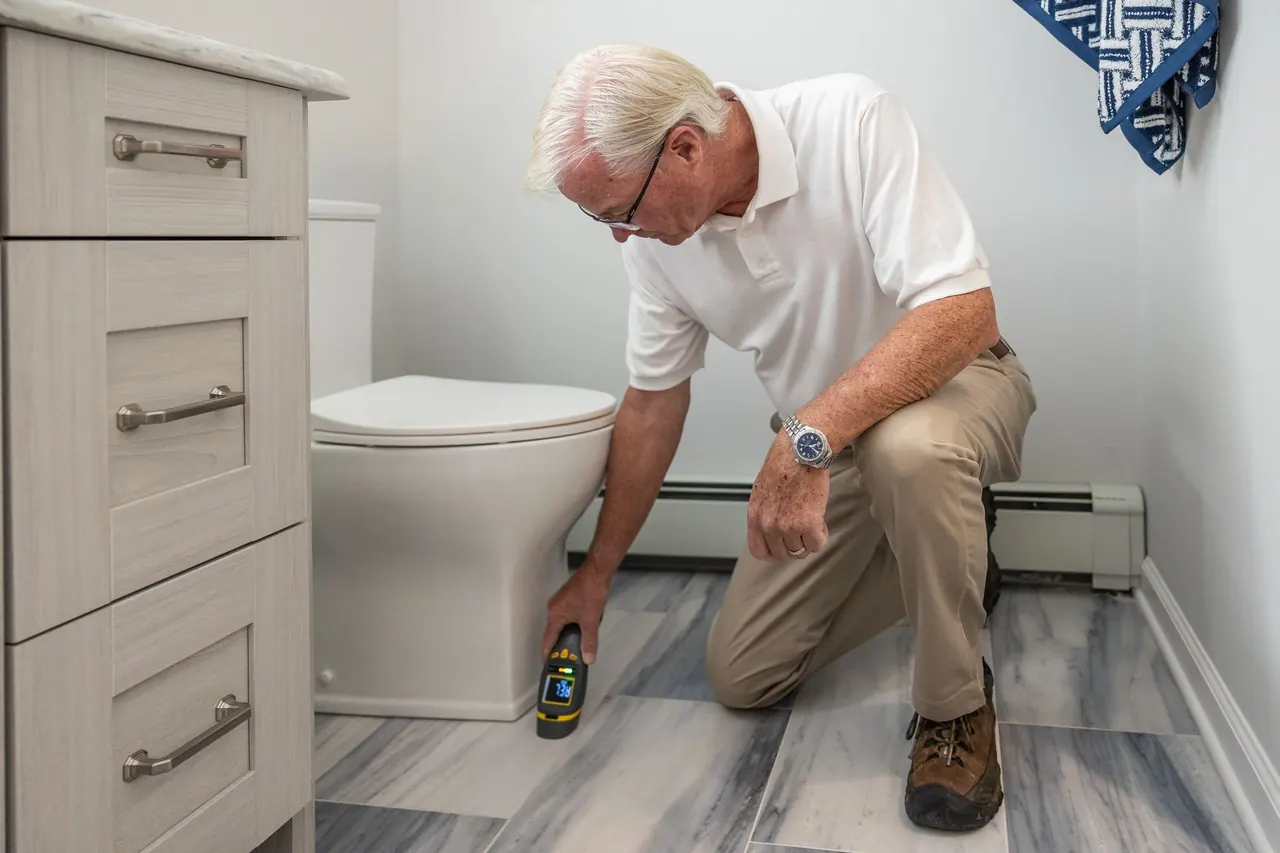
- Skipping the moisture meter. A $40 pin meter tells you more than your hand ever will.
- Turning the AC off to "let the house air out." Keep it running. It is a dehumidifier you already own.
If you want to know whether a wall is dry, test it. If you want it dry in 3 to 5 days instead of 3 to 5 weeks, that is what dehumidification Sugar Land TX equipment is for. We run LGR dehumidifiers that pull 80 to 130 pints of water a day out of the air, which is roughly 10 times what a residential unit can do.
When to call a professional
Call a professional when the water covers more than one room, when it came from a sewer or storm source, when it has been sitting more than 24 hours, or when you cannot find the source. Those four conditions push a job past what a shop vac and a box fan can fix.
We also get called when the water is gone but the smell is not. That musty odor is mold in a wall cavity, and it does not go away on its own. Our technicians find it with thermal imaging, dry the cavity, and treat the affected materials before it spreads.
Sugar Land Water Damage Pros works across Fort Bend County, from Telfair to Greatwood, and we handle everything from a single wet bathroom to a full residential water damage cleanup in Sugar Land, Texas. We find the source, extract the water, dry the structure, and tell you honestly what can be saved and what cannot.
Frequently Asked Questions
How do I safely remove standing water in my Sugar Land home?
Shut off the water source, cut power to every wet room at the breaker, then pump the water in 2 to 3 inch stages starting at the deepest point. Wear rubber boots and gloves, and never stand in water near a live outlet. A single room usually takes 3 to 5 hours.
Can standing water cause mold in Sugar Land TX?
Yes. In Sugar Land's 75 to 90 percent humidity, mold can begin growing within 24 to 72 hours of a water event. Visible mold typically appears on drywall and framing by the 48 to 72 hour mark, and carpet padding is usually a loss after 48 hours.
Who do I call to remove standing water in Sugar Land?
Call a licensed water damage restoration company that can extract, dry, and document the loss in one visit. Sugar Land Water Damage Pros handles standing water removal across Fort Bend County at (281) 326-6146, and we can usually be on site the same day.
How long can standing water sit before damage in Sugar Land, Texas?
Permanent damage starts at 24 to 48 hours. Water wicks into drywall and subfloor within the first day, mold activates in the second, and structural rot begins after 72 hours. A room that costs $1,200 to dry on day one can cost $6,000 to rebuild on day five.
Can I just use a shop vac to remove standing water?
A shop vac works for water under half an inch. Above that, a submersible pump rated at 1,500 gallons per hour is far faster. Either way, extraction is only half the job. Without dehumidification, the framing stays wet and mold returns within a week.
Get help with Water Damage Restoration in Sugar Land
Standing water does not wait, and neither should you. Whether it is a burst supply line in First Colony or a storm backup in Riverstone, our team is set up to pump, dry, and rebuild the same week you call.
Call Sugar Land Water Damage Pros at (281) 326-6146 and we will tell you over the phone what to do first, then get a crew to your door.