Signs of hidden water damage behind walls in First Colony homes
Musty odors, soft drywall, and rising water bills are the first clues. Here is how First Colony homeowners find hidden water damage before it spreads.
The earliest signs of hidden water damage behind walls in First Colony are a musty smell that won't leave a room, drywall that feels soft or cool to the touch, and a water bill that climbs without any change in how you use water. If you notice any of those three, water is already moving through your wall cavity. This post walks through the specific clues we look for in First Colony homes, how to check them yourself, and when a hidden leak needs professional moisture detection.
What hidden water damage behind walls in First Colony actually looks like
Hidden water damage behind walls First Colony is moisture that has entered a wall cavity through a slow leak, a failed supply line, or a roof or window penetration, and has not yet reached the surface where you can see it. It is a category of damage, not a single event - it can come from a pinhole slab leak under the foundation, a slow drip from a second-floor bathroom, or a hairline crack around a window frame after a hard spring storm.
What makes it tricky in First Colony is the construction. Most of the neighborhood was built between the late 1970s and the 1990s, and the walls in those homes are full of copper supply lines, cast-iron drains, and original window flashing. Copper thins from the inside out. Cast iron cracks at the hub. Flashing pulls away from the frame. None of those failures announce themselves. They just seep.
By the time a stain shows up on the paint, the drywall paper is usually already growing mold on the back side. That is why we treat any unexplained musty odor in a First Colony home as an active leak until moisture detection proves otherwise.
The 7 warning signs First Colony homeowners miss
Signs of hidden water damage First Colony TX homeowners overlook are almost always subtle at first. Here are the seven we see most often, roughly in the order they tend to appear.
- A musty, earthy smell in one room. Not a general house smell - one room, usually a bathroom, laundry, or the wall behind the refrigerator. If it gets stronger when the AC runs, the moisture is inside the wall, not in the air.
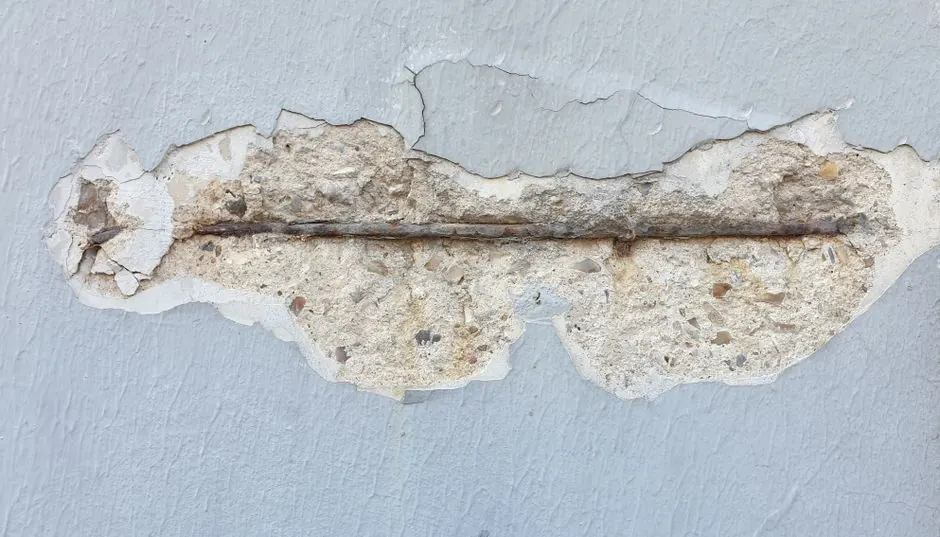
- Paint that bubbles, blisters, or peels in a patch. Water pushing from behind the drywall lifts the paint film. A patch the size of a dinner plate usually means a leak has been running for at least a few weeks.
- Drywall that feels soft, spongy, or noticeably cooler than the wall next to it. Press with the back of your hand. Wet drywall wicks heat away, so it reads cool even in a warm room.
- A faint brown or yellow ring on the ceiling below a bathroom. That ring is the leading edge of water that has traveled down the joist bay. The actual leak is often 4 to 8 feet away from the stain.
- Baseboards that are separating from the wall or swelling at the bottom. MDF baseboard swells within 24 to 48 hours of sustained moisture contact.
- A water bill that jumps 10 to 20 percent with no change in habits. A toilet flapper leak or a slab leak can waste 200 gallons a day without a visible puddle.
- Warped or cupped hardwood near a wall. Wood flooring cups toward the moisture source. If the cupping is along one wall, the leak is in that wall.
Any one of these alone is worth a look. Two or more in the same area means water has been present long enough to affect the framing.
Why First Colony homes are prone to hidden leaks
First Colony sits on the same expansive clay soil that runs under most of Sugar Land, and that soil moves with every wet-dry cycle. When the ground shrinks in a dry summer, it pulls away from the foundation and stresses the supply lines running under the slab. When it swells after a heavy rain, it pushes back. That constant flex is the number one cause of slab leaks we find in this neighborhood.
The building stock matters too. Homes built in the 1980s and early 1990s are now 30 to 45 years old. Original copper supply lines are at the end of their service life. Original cast-iron drain lines are cracked or scaled. Original polybutylene lines, used in some homes built in that window, are prone to pinhole failures at the fittings. None of these fail loudly.
Add the Gulf Coast humidity - Sugar Land averages around 75 percent relative humidity for much of the year - and any slow leak inside a wall has plenty of moisture in the air to feed mold growth. A wall cavity that stays above 60 percent relative humidity for 48 hours is a mold-friendly environment. That is a low bar in this climate.
How to detect hidden water damage in First Colony TX
How to detect hidden water damage in First Colony TX comes down to three checks you can do yourself in about 15 minutes, followed by a professional moisture survey if any of them raise a flag.
Check 1: The water meter test
Turn off every fixture in the house - sinks, showers, washing machine, dishwasher, ice maker. Do not forget the irrigation system and the pool autofill. Then watch the low-flow indicator on your water meter for 10 minutes. If the small triangle or dial is still moving, you have a leak. That test costs nothing and rules out the obvious.
Check 2: The hand-and-nose walk
Walk the perimeter of every room that shares a wall with a bathroom, kitchen, or laundry. Run the back of your hand along the base of the drywall and along the baseboard. Feel for cool spots, soft spots, or bubbling paint. Then close the door and smell the room after 30 minutes with the AC off. A musty smell that concentrates in one corner is your starting point.
Check 3: The cabinet inspection
Pull everything out from under the kitchen and bathroom sinks and look at the cabinet floor. Staining, soft particleboard, or a white chalky residue on the pipes points to a slow supply or drain leak. Do the same behind the refrigerator and the washing machine. Appliance supply lines are a common hidden leak source, and we handle those regularly - if you find one, our team can take care of the appliance leak water cleanup in Sugar Land, Texas and dry the cavity before mold sets in.
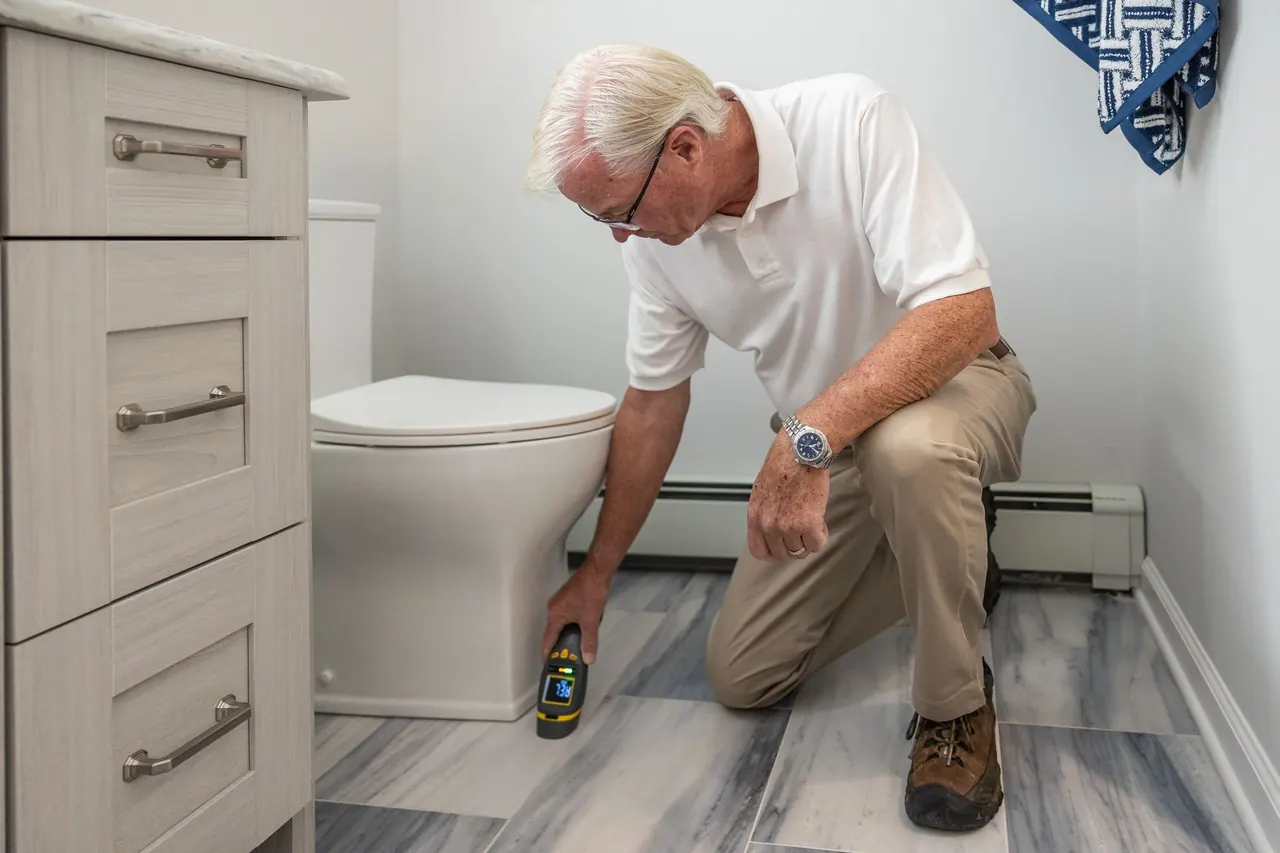
If all three checks are clean but you still smell something, the leak is inside the wall and you need moisture detection. We use thermal imaging and pin-type meters to map the wet zone without cutting exploratory holes. If you want a broader look at how we handle the whole process, our Water Damage Restoration Sugar Land TX page covers the full scope from detection through drying.
Can hidden water damage cause mold in First Colony homes?
Yes - hidden water damage causes mold in First Colony homes in as little as 24 to 48 hours when the wall cavity stays above 60 percent relative humidity, which is common here from April through October. Mold does not need a puddle. It needs damp drywall paper, damp framing, and still air.
The mold you cannot see is the problem. It grows on the back side of the drywall, on the paper facing, and on the wood studs. By the time you smell it in the room, the colony is usually several square feet. In First Colony homes we have opened walls where the visible stain was the size of a saucer and the mold behind it covered two stud bays.
If you find mold, do not paint over it. Paint traps the moisture and the mold keeps growing. The wall has to be dried, the affected drywall removed, and the framing treated before any repair. That is a drying job first and a drywall job second. Our wall water damage drying in Sugar Land, Texas service is built for exactly that sequence - we dry the cavity to a verified moisture content before anyone closes it up.
Common mistakes First Colony homeowners make
The most expensive mistake we see is waiting for the stain to get bigger. Water travels along the path of least resistance - down a stud, across a joist, along a copper line - so the stain you see is rarely where the leak is. Waiting two weeks to "see if it spreads" usually means the leak has been running for a month.
The second mistake is painting or caulking over the symptom. A fresh coat of paint hides the evidence and traps moisture against the drywall paper. The mold grows faster in the dark.
The third is running a box fan and calling it dried. A box fan moves air across the surface. It does not pull moisture out of the drywall core, the insulation, or the studs. Structural drying requires controlled airflow, heat, and dehumidification, and it needs to be measured with a moisture meter, not guessed at. If you want to understand what proper drying actually involves, our structural drying services in Sugar Land, Texas page walks through the equipment and the targets we dry to.
The fourth mistake is assuming homeowners insurance will cover it. Most policies cover sudden and accidental discharge - a burst pipe, a failed supply line - but not long-term seepage. If the adjuster determines the leak was slow and ongoing for months, the claim can be denied. Documenting the date you first noticed the sign matters.
When to call a professional
Call a professional when you smell mustiness in a room with no visible source, when the water meter test shows flow with everything off, when drywall feels soft or cool over an area larger than a dinner plate, or when you see cupping in hardwood along a single wall. Those four signs mean the leak is inside the cavity and the clock on mold growth has already started.
At Sugar Land Water Damage Pros, we locate the leak with thermal imaging and moisture meters, dry the cavity to verified targets, and document the moisture readings so you have a record for your insurance claim. We work in First Colony, Telford, Riverstone, and the surrounding Sugar Land neighborhoods, and we can usually be on-site the same day you call.
Frequently Asked Questions
What are the signs of hidden water damage behind walls in First Colony?
A musty odor in one room, soft or cool drywall, bubbling paint, swollen baseboards, a ceiling ring below a bathroom, and a water bill that rises 10 to 20 percent with no change in use. Two or more of these in the same area means an active leak.
How do I know if there is water behind my walls in First Colony TX?
Run the water meter test with every fixture off for 10 minutes. If the low-flow indicator still moves, you have a leak. Then feel the drywall for cool or soft spots. If both point to the same wall, moisture detection is the next step.
Can hidden water damage cause mold in First Colony homes?
Yes, in 24 to 48 hours when the wall cavity stays above 60 percent relative humidity. That is common here from April through October. Mold grows on the back of the drywall and on the studs before you ever see a stain.
Who do I call for hidden water damage in First Colony, Texas?
Call a licensed water damage restoration company that uses thermal imaging and moisture meters to find the leak before cutting. Sugar Land Water Damage Pros serves First Colony and the surrounding Sugar Land neighborhoods, and we can usually be on-site the same day.
Does homeowners insurance cover hidden water damage in First Colony?
Most policies cover sudden and accidental discharge, like a burst pipe or failed supply line. Long-term seepage is often excluded. Document the date you first noticed the sign and keep the moisture readings from your restoration company for the claim.
Get help with Water Damage Restoration in Sugar Land
If you smell mustiness or feel a soft spot in a First Colony wall, the leak is already running. We find it, dry the cavity, and document the moisture readings so your repair and your insurance claim both start from solid ground.
Call Sugar Land Water Damage Pros at (281) 326-6146 for same-day moisture detection and hidden water damage repair in First Colony, Texas.